
Why Documentation Matters in Chemical Export
Learn why accurate documentation is essential in chemical export for compliance, customs clearance, product safety, and global trade success.
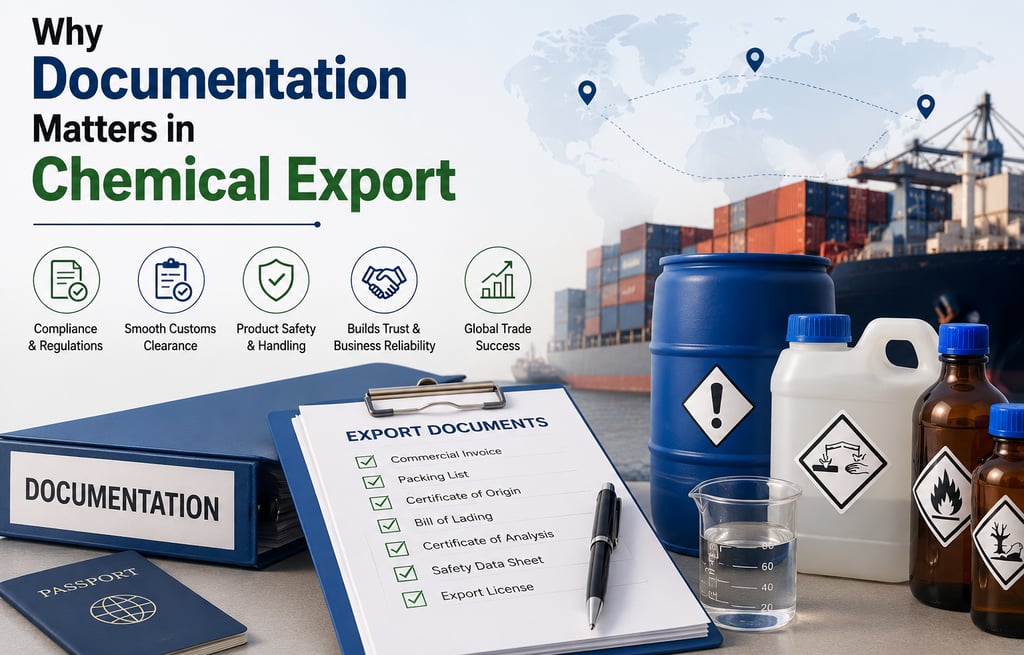
The global chemical export industry depends heavily on accuracy, compliance, and trust. One of the most important factors that ensures smooth international trade is proper documentation. In chemical exports, documentation is not just paperwork — it is a critical part of legal compliance, product safety, customs clearance, and customer confidence.
Whether exporting industrial chemicals, pharmaceutical ingredients, nutraceutical raw materials, or specialty chemicals, accurate export documentation helps businesses avoid delays, financial losses, and regulatory issues.
What Is Chemical Export Documentation?
Chemical export documentation includes all legal, technical, shipping, and regulatory documents required for transporting chemicals across international borders. These documents provide essential information about the product, its composition, handling instructions, quality standards, and safety requirements.
Export documentation helps customs authorities, importers, logistics providers, and regulatory agencies verify the shipment.
Importance of Documentation in Chemical Export
1. Ensures Regulatory Compliance
Different countries have strict regulations regarding chemical imports and exports. Proper documentation ensures compliance with international trade laws and chemical safety standards.
Incorrect or incomplete documents can result in:
Shipment delays
Customs rejection
Legal penalties
Product seizure
Loss of business reputation
Exporters must comply with global standards and country-specific import regulations.
2. Smooth Customs Clearance
Customs authorities require accurate documents to verify product details, quantity, classification, and safety information. Proper documentation speeds up customs clearance and reduces unnecessary inspections.
Accurate paperwork helps prevent:
Port delays
Extra storage charges
Shipment holds
Import restrictions
Efficient documentation improves overall supply chain management.
3. Improves Product Safety and Handling
Chemicals require careful transportation and storage. Safety documents provide important handling instructions for logistics providers, warehouse staff, and customers.
Documents such as Safety Data Sheets (SDS) help identify:
Chemical hazards
Storage conditions
Emergency response procedures
Protective measures
Transportation guidelines
This reduces the risk of accidents during shipping and handling.
4. Builds Trust with International Buyers
Professional documentation demonstrates reliability and transparency. Buyers prefer working with chemical suppliers that provide complete and accurate documentation.
Well-documented shipments increase customer confidence by ensuring:
Product authenticity
Quality consistency
Regulatory compliance
Safe transportation
Traceability of materials
Strong documentation practices help build long-term business relationships.
5. Supports Quality Assurance
Quality-related documents confirm that chemical products meet required specifications and standards.
Important quality documents include:
Certificate of Analysis (COA)
Test reports
Product specifications
Manufacturing certifications
Compliance certificates
These documents help buyers verify purity, composition, and product quality before use.
Essential Documents Required in Chemical Export
Commercial Invoice
Contains product details, pricing, quantity, buyer information, and payment terms.
Packing List
Provides shipment packaging details, weight, dimensions, and package count.
Certificate of Analysis (COA)
Confirms the product meets quality and technical specifications.
Safety Data Sheet (SDS/MSDS)
Includes hazard identification, safe handling instructions, and emergency measures.
Bill of Lading
Acts as proof of shipment and transportation agreement.
Certificate of Origin
Verifies the country where the product was manufactured.
Import and Export Licenses
Required for regulated chemical products in certain countries.
Challenges Caused by Poor Documentation
Many exporters face issues due to incomplete or inaccurate paperwork. Common problems include:
Delayed shipments
Customs clearance failures
Financial penalties
Product rejection
Increased logistics costs
Loss of customer trust
Even small documentation errors can create major international trade problems.
Digital Transformation in Chemical Documentation
Modern chemical exporters are adopting digital documentation systems to improve accuracy and efficiency. Digital solutions help companies:
Reduce paperwork errors
Improve tracking and traceability
Speed up document processing
Simplify compliance management
Enhance communication with buyers
Technology is making chemical export operations more transparent and efficient.
Importance of Choosing the Right Chemical Export Partner
Reliable chemical suppliers understand the importance of accurate export documentation. Businesses should work with experienced export partners who follow international standards and maintain strong quality systems.
Professional exporters ensure:
Timely documentation
Regulatory compliance
Product traceability
Quality assurance
Smooth global logistics
Choosing the right supplier helps avoid operational risks and ensures successful international trade.
Conclusion
Documentation plays a vital role in the chemical export industry. It ensures legal compliance, supports product safety, improves customs clearance, and builds trust with international buyers. Proper documentation also helps companies maintain quality standards and avoid costly trade disruptions.
As global chemical trade continues to grow, businesses must focus on accurate, transparent, and compliant documentation practices to achieve long-term success in international markets.
For trusted chemical sourcing and export solutions, visit Crestline Chem International LLP.