
Why Fiber Ingredients Are Important in Food Manufacturing
Discover why fiber ingredients are important in food manufacturing for improving nutrition, digestion, texture, and functional food quality..
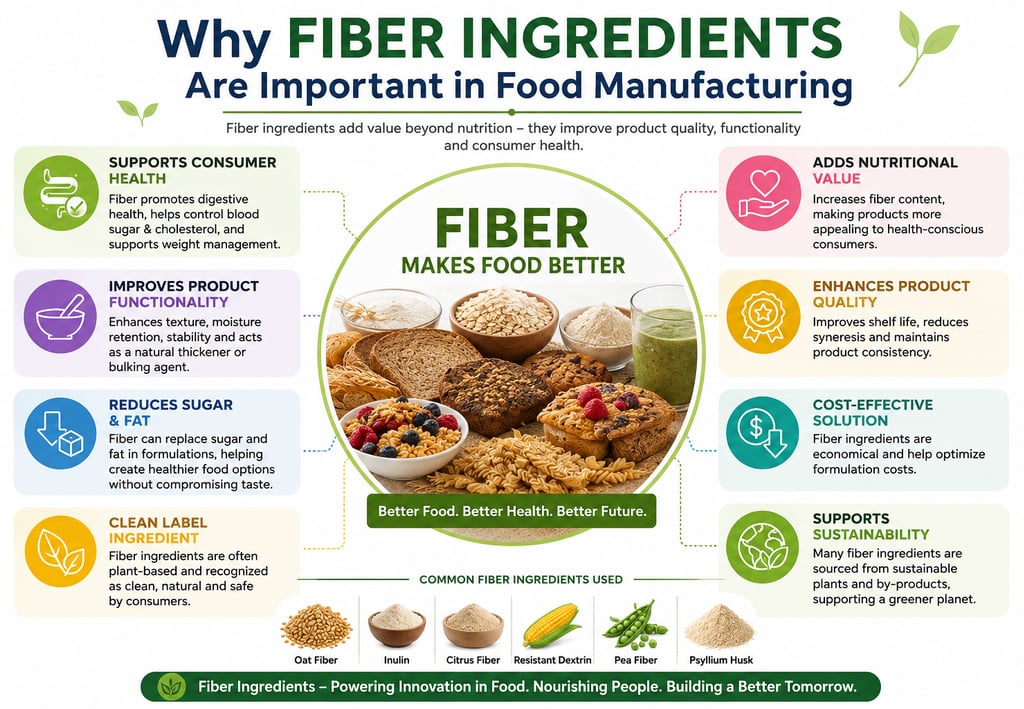
Fiber ingredients have become an essential part of modern food manufacturing due to increasing consumer awareness about health, nutrition, and digestive wellness. As people seek healthier food choices, manufacturers are focusing on adding dietary fiber to a wide range of food and beverage products.
From bakery products and cereals to functional beverages and nutritional supplements, fiber ingredients help improve both nutritional value and product functionality. The growing demand for balanced diets and preventive healthcare has made fiber one of the most important ingredients in the global food industry.
What Are Fiber Ingredients?
Fiber ingredients are dietary fibers added to food products to improve nutrition, texture, digestion, and overall health benefits. Dietary fiber is a type of carbohydrate that the body cannot fully digest, but it plays a major role in maintaining digestive health and supporting wellness.
Fiber ingredients are commonly sourced from:
Fruits
Vegetables
Whole grains
Legumes
Oats
Psyllium husk
Chicory root
Corn and wheat fibers
These ingredients are widely used in processed foods, supplements, and functional food products.
Growing Demand for Fiber-Enriched Foods
Modern lifestyles and unhealthy eating habits have increased health concerns such as obesity, diabetes, digestive disorders, and heart disease. Consumers are now actively choosing foods that offer additional health benefits.
This shift has increased demand for:
High-fiber snacks
Fiber-enriched bakery products
Functional beverages
Nutritional supplements
Healthy breakfast cereals
Digestive wellness products
Food manufacturers are responding by incorporating fiber ingredients into innovative product formulations.
Health Benefits of Fiber Ingredients
1. Supports Digestive Health
Fiber helps maintain healthy digestion and supports regular bowel movements. It promotes gut health by improving intestinal function and supporting beneficial bacteria.
Digestive health is one of the primary reasons consumers choose fiber-rich foods.
2. Helps Weight Management
Fiber-rich foods create a feeling of fullness, helping consumers control appetite and reduce overeating. This makes fiber ingredients popular in weight management and fitness products.
3. Supports Heart Health
Certain dietary fibers help reduce cholesterol levels and support cardiovascular health. Fiber-enriched foods are increasingly used in heart-health-focused product categories.
4. Helps Control Blood Sugar Levels
Fiber slows sugar absorption in the body, helping maintain balanced blood glucose levels. This benefit is especially important for diabetic-friendly food products.
5. Improves Overall Wellness
Fiber contributes to overall nutritional balance and supports long-term preventive healthcare. Consumers now view fiber as an essential part of healthy living.
Types of Fiber Ingredients Used in Food Manufacturing
Soluble Fiber
Soluble fiber dissolves in water and forms a gel-like substance in the digestive system. It is commonly used in:
Functional beverages
Dairy products
Nutritional supplements
Heart-health foods
Examples include:
Pectin
Beta-glucan
Inulin
Psyllium
Insoluble Fiber
Insoluble fiber does not dissolve in water and helps improve digestion and bowel movement.
It is commonly used in:
Bakery products
Cereals
Snack foods
Whole grain products
Examples include:
Wheat bran
Cellulose
Corn fiber
Functional Benefits of Fiber in Food Products
In addition to health benefits, fiber ingredients also improve food manufacturing processes and product quality.
Texture Improvement
Fiber helps improve texture, consistency, and mouthfeel in bakery and processed food products.
Moisture Retention
Fiber ingredients help maintain moisture and freshness, improving product shelf life.
Fat and Sugar Reduction
Fiber can replace fat and sugar in certain formulations while maintaining texture and taste.
Product Stability
Fiber supports product structure and stability in beverages, sauces, and processed foods.
Fiber Ingredients in Functional Foods
Functional foods are products designed to provide additional health benefits beyond basic nutrition. Fiber plays a major role in this growing market.
Popular fiber-based functional products include:
Protein bars
Meal replacement shakes
Gut-health beverages
Nutritional powders
Fiber-enriched dairy products
The global functional food market continues to expand due to rising health awareness.
Clean Label and Natural Fiber Trends
Consumers now prefer clean-label products made with natural and recognizable ingredients. Natural fiber sources are gaining popularity because they align with modern health and wellness trends.
Manufacturers are increasingly using:
Oat fiber
Apple fiber
Citrus fiber
Bamboo fiber
Pea fiber
These natural ingredients help companies meet clean-label expectations while improving product nutrition.
Challenges in Fiber Ingredient Formulation
Although fiber ingredients offer many benefits, manufacturers also face formulation challenges such as:
Taste balancing
Texture control
Product stability
Water absorption management
Ingredient compatibility
Advanced food technology and ingredient innovation help overcome these challenges.
Future of Fiber Ingredients in Food Industry
The future of fiber ingredients looks highly promising as consumers continue prioritizing health-focused diets and preventive wellness.
Key future trends include:
Personalized nutrition products
Gut-health innovations
Plant-based functional foods
Fiber-rich convenience foods
Sustainable natural ingredient sourcing
Food manufacturers are expected to invest more in advanced fiber solutions to meet evolving consumer demands.
Conclusion
Fiber ingredients have become an essential component of modern food manufacturing. They provide important health benefits, improve food functionality, support clean-label trends, and help manufacturers create healthier products for consumers.
As demand for functional and nutritious foods continues to grow, fiber ingredients will play an even bigger role in shaping the future of the food industry.
For reliable food ingredient sourcing and industrial ingredient solutions, visit Crestline Chem International LLP.