
Glycine: Benefits, Functions, and Industrial Uses
Discover glycine’s role as a functional amino acid in industrial applications including food manufacturing, pharmaceuticals, nutraceuticals, and cosmetics
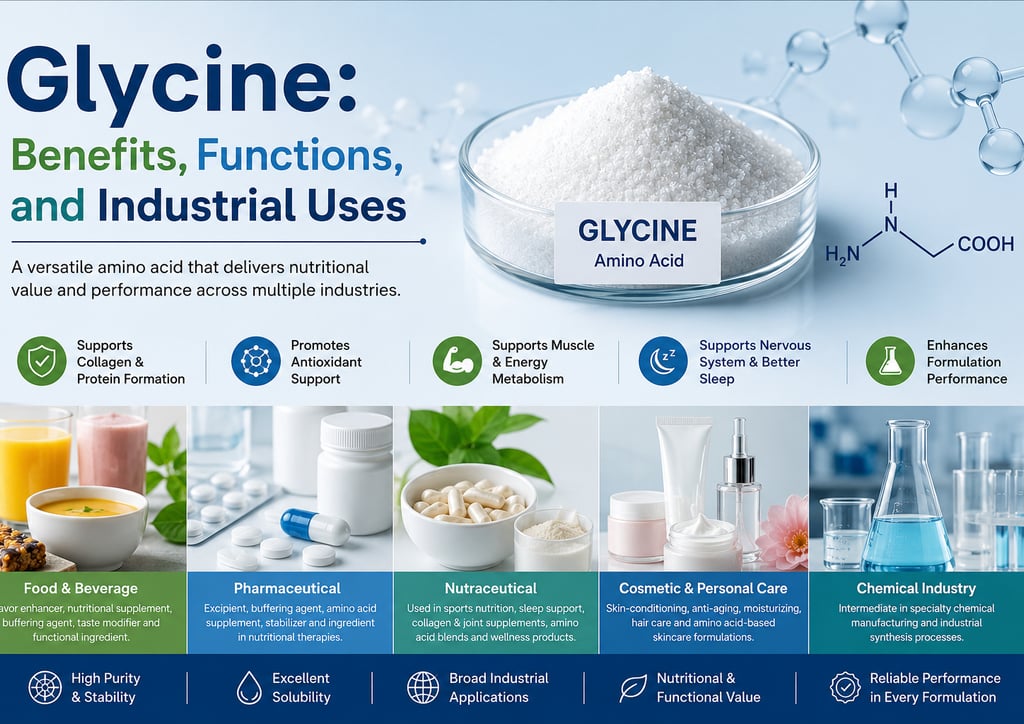
Glycine is one of the simplest amino acids, yet it plays a vital role in several industries including food, pharmaceuticals, nutraceuticals, cosmetics, and chemical manufacturing. Known for its nutritional value and functional properties, glycine is widely used as a versatile ingredient in modern industrial formulations.
What Is Glycine?
Glycine is a non-essential amino acid, meaning the body can produce it naturally. It is an important building block of proteins and plays a key role in collagen production, metabolism, and antioxidant support. Because of its sweet taste, stability, and excellent compatibility with other ingredients, glycine is widely used in many industrial applications.
Key Benefits of Glycine
1. Supports Collagen and Protein Formation
Glycine is a major component of collagen, which helps support skin, joints, bones, and connective tissues. This makes it an important ingredient in nutraceutical, pharmaceutical, and cosmetic formulations.
2. Promotes Antioxidant Support
Glycine helps in the production of glutathione, an important antioxidant that protects cells from oxidative stress and supports overall wellness.
3. Supports Muscle and Energy Metabolism
Glycine is involved in creatine production, which helps improve muscle energy and supports sports nutrition and performance-based supplement formulations.
4. Supports Nervous System Function
Glycine acts as a neurotransmitter and is often associated with relaxation, sleep support, and nervous system health, making it useful in wellness formulations.
5. Improves Formulation Performance
With its mild sweetness, buffering ability, and excellent solubility, glycine works well in food, pharmaceutical, and specialty formulations.
Uses of Glycine in Different Industries
Food and Beverage Industry
Glycine is widely used in food manufacturing as:
Flavor enhancer
Nutritional supplement
Taste modifier
Buffering agent
Functional amino acid ingredient in health foods and beverages
Its sweet taste and stability make it useful in dietary products and specialty food formulations.
Pharmaceutical Industry
In pharmaceutical applications, glycine is used as:
Excipient in formulations
Buffering agent
Amino acid supplement
Stabilizer in medicines
Ingredient in nutritional therapies
Its safety and compatibility make it valuable in drug and healthcare formulations.
Nutraceutical Industry
Glycine is commonly used in:
Sports nutrition products
Sleep support supplements
Collagen and joint formulations
Amino acid blends
Its health-supporting properties make it a preferred ingredient in nutraceutical manufacturing.
Cosmetic and Personal Care Industry
Glycine is used in cosmetic products such as:
Skin-conditioning creams
Anti-aging formulations
Moisturizers
Hair care products
Amino acid-based skincare products
It supports product performance in premium personal care formulations.
Chemical Manufacturing
Glycine is also used as an intermediate in specialty chemical manufacturing where its stability and chemical properties support industrial synthesis and formulation processes.
Why Manufacturers Choose Glycine
Industries prefer glycine because it offers:
Multi-functional performance
High purity and stability
Excellent solubility
Broad industrial applications
Nutritional and functional value
Reliable formulation compatibility
Conclusion
Glycine is a highly versatile amino acid with a wide range of benefits and industrial applications. From food and nutraceuticals to pharmaceuticals and cosmetics, glycine supports product quality, functionality, and formulation efficiency. Its growing demand across industries makes it an important ingredient in modern manufacturing solutions.