
Eco-Friendly Chemicals and Green Manufacturing Trends
Explore eco-friendly chemicals and green manufacturing trends shaping sustainable industries through safer production, energy efficiency, and innovation.
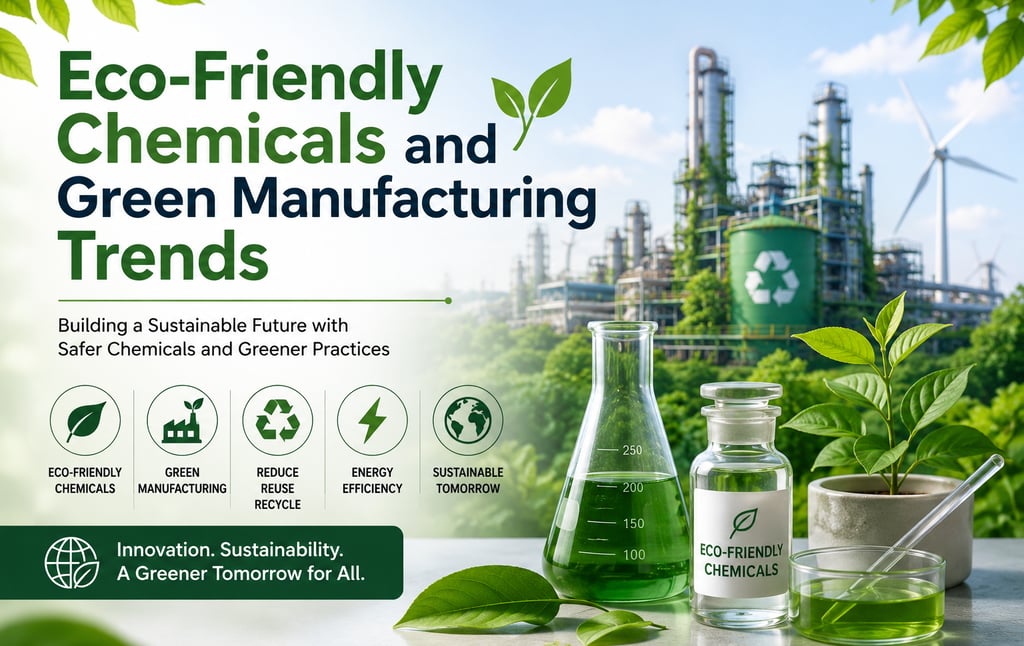
As industries across the world move toward sustainability, the demand for eco-friendly chemicals and green manufacturing practices is growing rapidly. Businesses today are focusing on reducing environmental impact, improving energy efficiency, and adopting safer chemical solutions for long-term growth.
From pharmaceuticals and nutraceuticals to agriculture, textiles, and industrial manufacturing, companies are embracing greener technologies to meet environmental regulations and consumer expectations.
What Are Eco-Friendly Chemicals?
Eco-friendly chemicals are substances designed to minimize harm to human health and the environment. These chemicals are produced, used, and disposed of in ways that reduce pollution, waste generation, and toxic exposure.
Green chemicals are often:
Biodegradable
Non-toxic
Energy-efficient in production
Safer for workers and consumers
Environmentally sustainable
They help industries reduce their carbon footprint while maintaining product quality and performance.
Understanding Green Manufacturing
Green manufacturing refers to environmentally responsible production processes that reduce waste, conserve resources, and improve sustainability throughout the manufacturing cycle.
This approach focuses on:
Reducing energy consumption
Lowering emissions
Recycling materials
Minimizing hazardous waste
Improving operational efficiency
Using renewable resources
Green manufacturing supports both environmental protection and business profitability.
Growing Importance of Sustainability in the Chemical Industry
Environmental concerns and stricter regulations are pushing chemical companies to adopt sustainable practices. Consumers and global industries now prefer suppliers that follow eco-friendly production methods.
Major drivers behind this trend include:
Climate change awareness
Government environmental regulations
Demand for sustainable products
Rising energy costs
Corporate sustainability goals
Consumer preference for green products
Sustainability is becoming a competitive advantage for modern chemical manufacturers.
Key Green Manufacturing Trends in 2026
1. Use of Bio-Based Chemicals
Bio-based chemicals are derived from renewable natural resources such as plants, agricultural waste, and biomass instead of petroleum-based materials.
These chemicals help reduce:
Carbon emissions
Dependence on fossil fuels
Environmental pollution
Industries are increasingly investing in plant-based and biodegradable chemical alternatives.
2. Energy-Efficient Manufacturing Processes
Manufacturers are adopting advanced technologies to reduce energy usage during production.
Popular solutions include:
Smart factory automation
Energy-efficient machinery
Heat recovery systems
Renewable energy integration
Process optimization technologies
Lower energy consumption reduces operating costs and environmental impact.
3. Waste Reduction and Recycling
Modern chemical companies are focusing on circular economy practices that minimize waste generation and maximize material reuse.
This includes:
Recycling industrial by-products
Water reuse systems
Sustainable packaging solutions
Reduced raw material waste
Waste management is becoming a critical part of sustainable manufacturing strategies.
4. Green Solvents and Safer Ingredients
Traditional solvents and hazardous chemicals are being replaced with safer alternatives that are less harmful to the environment and human health.
Green solvents offer benefits such as:
Reduced air pollution
Improved workplace safety
Better environmental compatibility
Safer ingredients help industries comply with international safety standards.
5. Sustainable Supply Chain Management
Companies are now focusing on building environmentally responsible supply chains.
Sustainable sourcing includes:
Ethical raw material procurement
Eco-friendly transportation
Reduced packaging waste
Carbon footprint monitoring
Responsible supplier partnerships
Supply chain sustainability improves brand reputation and operational efficiency.
Benefits of Eco-Friendly Chemicals and Green Manufacturing
Environmental Benefits
Reduced pollution
Lower greenhouse gas emissions
Better waste management
Conservation of natural resources
Business Benefits
Improved operational efficiency
Reduced long-term costs
Better regulatory compliance
Stronger customer trust
Enhanced global market opportunities
Consumer Benefits
Safer products
Healthier environments
Sustainable purchasing choices
Green practices benefit industries, consumers, and the planet.
Challenges in Green Manufacturing
Although sustainability offers major advantages, companies also face certain challenges, including:
High initial investment costs
Technology adaptation requirements
Regulatory complexity
Supply chain transformation
Limited awareness in some markets
Despite these challenges, long-term benefits continue to drive industry adoption.
Future of Sustainable Chemical Manufacturing
The future of the chemical industry is closely connected to sustainability and innovation. Companies investing in eco-friendly chemicals and green technologies are expected to gain stronger market positions in the coming years.
Emerging technologies such as:
Green chemistry
Artificial intelligence in manufacturing
Carbon capture systems
Renewable raw materials
Smart sustainability monitoring
will continue shaping the next generation of chemical manufacturing.
Conclusion
Eco-friendly chemicals and green manufacturing are transforming the global chemical industry. Businesses are increasingly adopting sustainable practices to reduce environmental impact, improve efficiency, and meet changing market demands.
As sustainability becomes a major focus worldwide, companies that invest in greener solutions will be better positioned for long-term success and global competitiveness.
For reliable chemical sourcing and sustainable industrial ingredient solutions, visit Crestline Chem International LLP.