
How Beta Carotene Supports Eye Health Naturally
Discover how beta carotene supports eye health naturally. Learn its benefits, the best food sources, absorption tips, and how it helps maintain healthy vision....
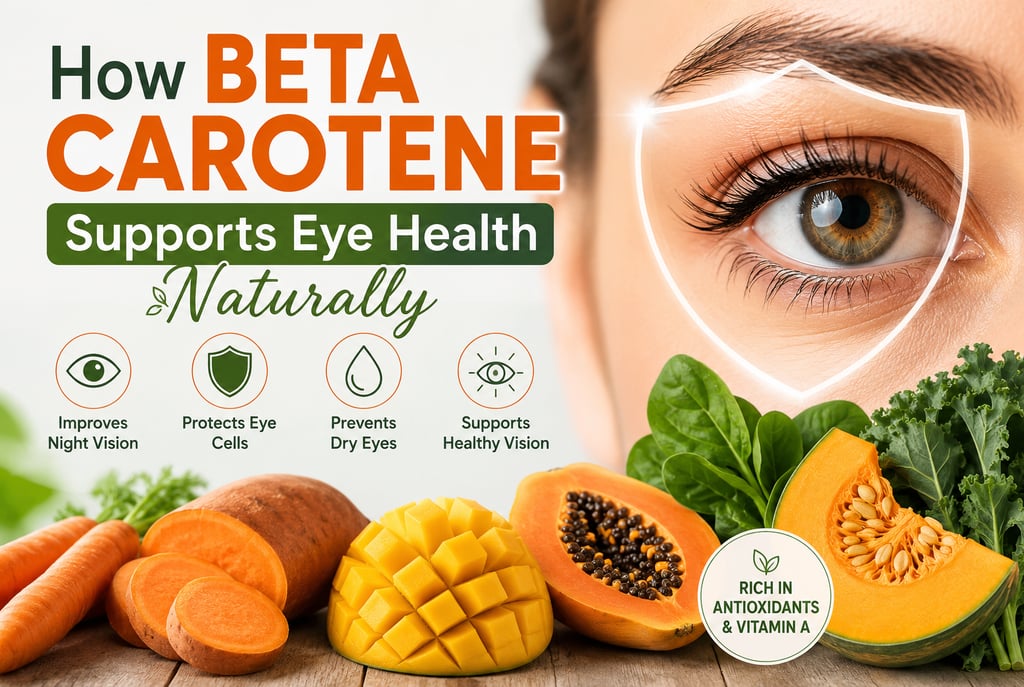
Our eyes work tirelessly every day, allowing us to read, drive, work, and enjoy the world around us. As we age, maintaining healthy vision becomes increasingly important. One nutrient that plays a vital role in protecting eye health is beta carotene. Found naturally in colorful fruits and vegetables, beta carotene is a powerful antioxidant that the body converts into vitamin A—an essential nutrient for healthy vision.
In this guide, we'll explore how beta carotene supports eye health, its benefits, the best food sources, recommended intake, and simple ways to include it in your daily diet.
What Is Beta Carotene?
Beta carotene is a naturally occurring plant pigment responsible for the bright orange, yellow, and red colors of many fruits and vegetables. It belongs to a group of compounds called carotenoids. Unlike vitamin A supplements, beta carotene is converted into vitamin A only as your body needs it, making it a safe and effective dietary source for most people.
Vitamin A is essential for maintaining healthy eyes, skin, immune function, and normal cell growth.
Why Is Vitamin A Important for Eye Health?
Vitamin A is a crucial component of rhodopsin, a light-sensitive protein found in the retina. Rhodopsin allows the eyes to adjust to changes in light, especially in dim environments.
Without enough vitamin A, your eyes cannot function efficiently, increasing the risk of vision problems.
Common symptoms of vitamin A deficiency include:
Difficulty seeing in low light (night blindness)
Dry eyes
Eye irritation
Increased risk of eye infections
Blurred vision in severe cases
Since beta carotene is converted into vitamin A, consuming enough beta carotene-rich foods helps maintain healthy eyesight naturally.
How Beta Carotene Supports Eye Health
1. Helps Prevent Night Blindness
One of the earliest signs of vitamin A deficiency is poor vision in low-light conditions. Beta carotene helps your body produce adequate vitamin A, supporting the retina's ability to function properly after sunset or in dim lighting.
2. Protects Eye Cells from Oxidative Damage
Our eyes are constantly exposed to sunlight, pollution, and blue light from digital screens. These factors generate free radicals that can damage eye tissues over time.
As a powerful antioxidant, beta carotene helps neutralize these harmful free radicals, reducing oxidative stress and supporting long-term eye health.
3. Supports a Healthy Cornea
The cornea is the transparent outer layer of the eye that protects internal structures and helps focus light. Vitamin A is essential for maintaining healthy corneal tissue and proper tear production.
Adequate beta carotene intake supports normal corneal health and may help reduce dryness and irritation.
4. Contributes to Healthy Aging Eyes
Although aging naturally affects vision, a diet rich in antioxidants may help protect eye tissues from age-related damage. Beta carotene works alongside nutrients like vitamins C and E, zinc, lutein, and zeaxanthin to support healthy vision throughout life.
5. Strengthens the Immune System Around the Eyes
Healthy eyes depend on a strong immune system. Vitamin A helps maintain the protective surface of the eyes and supports immune responses that help defend against infections.
Best Food Sources of Beta Carotene
Adding colorful fruits and vegetables to your meals is one of the easiest ways to increase beta carotene intake.
Excellent sources include:
Carrots
Sweet potatoes
Pumpkin
Butternut squash
Spinach
Kale
Swiss chard
Mangoes
Papaya
Apricots
Red and yellow bell peppers
Cantaloupe
The deeper the orange, yellow, or dark green color, the more beta carotene the food usually contains.
Tips to Improve Beta Carotene Absorption
Beta carotene is a fat-soluble nutrient, meaning your body absorbs it better when eaten with healthy fats.
Try these simple ideas:
Add olive oil to salads.
Cook vegetables with a little healthy oil.
Eat carrots with hummus.
Include avocado with leafy greens.
Add nuts or seeds to vegetable dishes.
Cooking vegetables such as carrots and spinach can also improve the availability of beta carotene.
Can Supplements Replace Food?
Most healthy adults can obtain enough beta carotene through a balanced diet rich in fruits and vegetables.
Supplements may be recommended in certain cases, but they are not suitable for everyone. High-dose beta carotene supplements have been linked to an increased risk of lung cancer in smokers and former smokers. Always consult a healthcare professional before taking supplements.
Who May Benefit from More Beta Carotene?
People who may benefit from increasing beta carotene-rich foods include:
Older adults
Individuals with poor vegetable intake
People with vitamin A deficiency
Those experiencing dry eyes
Individuals looking to support long-term eye health
A healthcare provider can help determine whether dietary changes or supplementation is appropriate.
Healthy Lifestyle Tips for Better Vision
In addition to eating beta carotene-rich foods, you can protect your eyes by:
Eating a balanced diet rich in fruits and vegetables
Wearing sunglasses with UV protection
Limiting smoking and tobacco use
Taking regular breaks from digital screens
Staying physically active
Managing diabetes and blood pressure
Scheduling routine eye examinations
Frequently Asked Questions
Is beta carotene the same as vitamin A?
No. Beta carotene is a precursor to vitamin A. Your body converts it into vitamin A as needed.
Which vegetable contains the most beta carotene?
Carrots, sweet potatoes, pumpkin, spinach, and kale are among the richest natural sources.
Can beta carotene improve eyesight?
Beta carotene helps maintain normal vision by supporting adequate vitamin A levels. While it cannot cure existing eye diseases, it plays an important role in preserving healthy vision.
Is it safe to eat beta carotene every day?
Yes. Eating beta carotene-rich foods daily is considered safe and is encouraged as part of a balanced diet.
Conclusion
Beta carotene is one of the most valuable nutrients for maintaining healthy eyes naturally. By supporting vitamin A production, protecting eye tissues from oxidative stress, and helping maintain healthy vision, it contributes significantly to lifelong eye health.
The best way to benefit from beta carotene is through a colorful, balanced diet filled with fresh fruits and vegetables. Combined with healthy lifestyle habits and regular eye check-ups, this nutrient can help keep your vision clear and your eyes healthy for years to come.