
Difference Between Organic and Inorganic Chemicals
Learn the key differences between organic and inorganic chemicals, their properties, applications, and importance in modern....
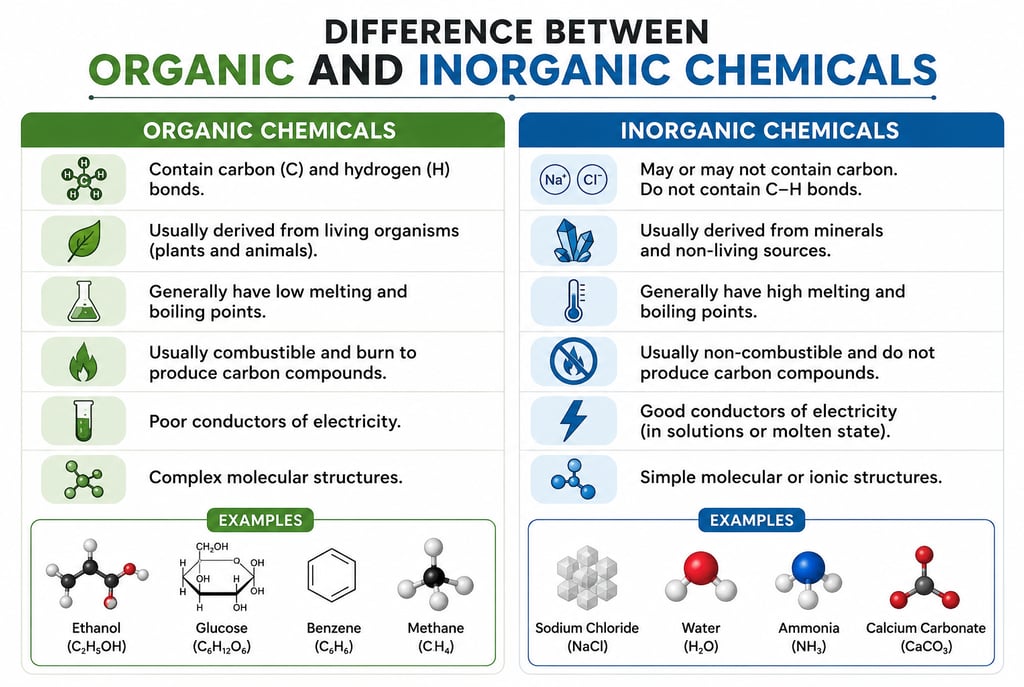
Chemicals play an essential role in modern industries, including pharmaceuticals, agriculture, food processing, cosmetics, construction, and manufacturing. Chemicals are generally classified into two major categories: organic chemicals and inorganic chemicals. Understanding the difference between these two types is important for industries, researchers, manufacturers, and consumers.
Both organic and inorganic chemicals have unique properties, applications, and industrial importance. They are widely used across various sectors depending on their chemical structure and functionality.
What Are Organic Chemicals?
Organic chemicals are compounds primarily made of carbon and hydrogen atoms. These chemicals often contain additional elements such as oxygen, nitrogen, sulfur, and phosphorus.
Organic chemicals are commonly associated with living organisms and natural sources, although many are also manufactured synthetically in laboratories and industries.
Common Characteristics of Organic Chemicals
Contain carbon-hydrogen bonds
Usually derived from natural sources or petroleum
Often combustible
Complex molecular structures
Lower melting and boiling points compared to inorganic compounds
Widely used in pharmaceuticals and food products
Examples of Organic Chemicals
Some common organic chemicals include:
Ethanol
Methane
Acetic acid
Benzene
Glucose
Urea
Proteins and carbohydrates
These chemicals are used in multiple industries including healthcare, food, cosmetics, plastics, and agriculture.
Applications of Organic Chemicals
1. Pharmaceutical Industry
Organic compounds are essential in medicine manufacturing. Most pharmaceutical drugs contain organic molecules.
2. Food Industry
Organic chemicals are used in flavoring agents, preservatives, sweeteners, and food additives.
3. Cosmetic Industry
Many skincare, haircare, and beauty products contain organic ingredients and compounds.
4. Agriculture
Organic chemicals are widely used in pesticides, fertilizers, and crop protection products.
5. Petrochemical Industry
Organic compounds form the base of fuels, plastics, lubricants, and synthetic materials.
What Are Inorganic Chemicals?
Inorganic chemicals are compounds that generally do not contain carbon-hydrogen bonds. These chemicals are usually derived from minerals, metals, and non-living materials.
Inorganic chemicals are simpler in structure and are widely used in industrial manufacturing, construction, water treatment, and heavy industries.
Common Characteristics of Inorganic Chemicals
Usually lack carbon-hydrogen bonds
Derived from minerals and ores
Higher melting and boiling points
Often non-combustible
Simpler molecular structures
Good electrical conductivity in some forms
Examples of Inorganic Chemicals
Common inorganic chemicals include:
Sodium chloride
Sulfuric acid
Ammonia
Calcium carbonate
Sodium hydroxide
Hydrochloric acid
Potassium nitrate
These chemicals are widely used in industrial processes and manufacturing applications.
Applications of Inorganic Chemicals
1. Construction Industry
Inorganic chemicals are used in cement, glass, ceramics, and building materials.
2. Water Treatment
Chemicals like chlorine and alum are essential for water purification and wastewater treatment.
3. Industrial Manufacturing
Many industrial processes depend on acids, alkalis, salts, and metal compounds.
4. Agriculture
Inorganic fertilizers help improve soil nutrients and crop productivity.
5. Electronics Industry
Certain inorganic compounds are used in batteries, semiconductors, and electronic devices.
Major Differences Between Organic and Inorganic Chemicals
BasisOrganic ChemicalsInorganic ChemicalsCompositionContain carbon-hydrogen bondsUsually lack carbon-hydrogen bondsSourceLiving organisms or petroleumMinerals and non-living sourcesStructureComplex molecular structuresSimpler molecular structuresFlammabilityOften combustibleUsually non-combustibleSolubilitySoluble in organic solventsSoluble in waterMelting PointLower melting pointsHigher melting pointsApplicationsPharmaceuticals, food, cosmeticsConstruction, manufacturing, water treatment
Importance of Both Chemical Types
Both organic and inorganic chemicals are essential for industrial development and modern living. Industries rely on a combination of these chemicals to create products, improve efficiency, and support innovation.
For example:
Pharmaceuticals depend heavily on organic compounds.
Construction and heavy manufacturing rely on inorganic chemicals.
Agriculture uses both organic and inorganic solutions.
Food and nutraceutical industries use specialized organic ingredients.
Understanding the differences helps businesses choose suitable chemicals for their applications.
Growing Demand in Global Chemical Industry
The global chemical industry continues to grow due to increasing industrialization, healthcare advancements, and technological innovation. Demand for specialty chemicals, sustainable chemicals, and high-purity industrial ingredients is rising worldwide.
Manufacturers now focus on:
Sustainable chemical production
Green chemistry solutions
Quality assurance
Regulatory compliance
Advanced chemical sourcing strategies
Reliable chemical suppliers play an important role in supporting industrial growth and global supply chains.
Conclusion
Organic and inorganic chemicals are both essential components of modern industries. While organic chemicals are mainly carbon-based compounds used in pharmaceuticals, food, and cosmetics, inorganic chemicals are mineral-based compounds widely used in manufacturing, construction, and industrial applications.
Understanding their differences helps industries select the right materials for efficient production and innovation. As global demand for high-quality chemicals continues to grow, businesses must work with trusted suppliers to ensure product quality, consistency, and compliance.
For reliable chemical sourcing and industrial ingredient solutions, visit Crestline Chem International LLP.